 Skip to content
Navigating the process of obtaining a spouse visa for the UK can be challenging, and unfortunately, many applicants face the disappointment of having their spouse visa refused. Whether due to incomplete documentation, failing to meet financial requirements, or other eligibility issues, a refusal can feel like a significant setback. However, understanding the common reasons for refusal and knowing the steps to take next can make all the difference. This guide will explore the top reasons for a spouse visa refused UK application and provide clear steps to help you move forward effectively.
Related: What Happens If UK ETA Is Refused? Steps to Take
Importance of Understanding Refusal Cases
Understanding the reasons behind a spouse visa refusal is crucial for increasing your chances of success in future applications. By identifying the specific issues that led to the refusal, you can take targeted actions to address them and strengthen your case.
Key fact: The UK ETA costs £20 per application, is valid for 2 years or until your passport expires, and allows unlimited visits of up to 6 months each. Visitors of 85 nationalities (Home Office figure) must hold an ETA before travelling (Source: GOV.UK).
Being informed about common pitfalls, such as insufficient evidence of the relationship, errors in paperwork, or failure to satisfy financial requirements, enables you to better prepare for the application process. Additionally, gaining insight into refusal cases not only saves time and effort but also minimizes emotional stress by providing a clear pathway to resolution. Knowledge and preparation are key to turning a setback into a successful outcome.
Common Reasons for Spouse Visa Refusals in the UK
Understanding the common reasons for spouse visa refusals in the UK can help applicants avoid costly mistakes and improve their chances of success. Below are some of the primary reasons why applications are commonly denied:
- Insufficient Evidence of a Genuine Relationship: The UK Home Office requires applicants to prove that their relationship is genuine and subsisting. Applications may be refused if there is a lack of supporting documentation, such as photographs, correspondence, or evidence of shared responsibilities like finances or living arrangements.
- Failure to Meet Financial Requirements: Applicants must demonstrate that they meet the minimum income threshold, which is currently £18,600 per year for sponsoring a partner, with higher thresholds if there are dependent children. Failing to provide accurate or sufficient financial documentation is a common reason for refusals.
- Errors or Omissions in the Application Form: Simple mistakes, such as providing incorrect information or failing to complete every section of the application form, can lead to a refusal. Attention to detail is crucial to avoid bureaucratic setbacks.
- Insufficient English Language Proficiency: Spouses are required to meet the English language requirements by passing an approved test or providing valid evidence of qualifications. Failure to meet this requirement can result in a rejection.
- Lack of Proper Documentation: Missing or illegible documents, such as passports, marriage certificates, or proof of accommodation, can make an application incomplete and result in a denial.
By understanding these common pitfalls, applicants can ensure their application is comprehensive, accurate, and well-supported, significantly improving their likelihood of success.
Consequences of a Spouse Visa Refusal
A spouse visa refusal can have significant repercussions for applicants and their families. Firstly, the emotional toll can be immense, as couples are forced to endure prolonged periods of separation, affecting personal relationships and family dynamics.
Financially, reapplying for a visa or seeking legal recourse often involves substantial costs, including legal fees and additional application charges. Furthermore, a visa refusal may negatively impact future immigration applications, as it could potentially raise red flags or require further explanation, complicating the applicant’s immigration history.
It’s essential for applicants to thoroughly address any areas of concern and seek professional guidance, if necessary, to mitigate the impact of a refusal and improve the chances of a successful application in the future.
Steps to Take After a Spouse Visa Refusal
After receiving a spouse visa refusal, it’s important to take the following steps:
Understand the Reasons for Refusal
Carefully read the refusal letter provided by the immigration authorities. This document will outline the specific reasons for the denial, allowing you to identify the issues that need to be addressed. Understanding these reasons is crucial for preparing your next steps.
Seek Professional Advice
Consult an experienced immigration advisor or attorney to evaluate your case. They can provide tailored guidance on how to overcome the refusal and improve your chances of success in a subsequent application or appeal.
Gather Additional Evidence
If the refusal was due to insufficient documentation or proof of your relationship, gather additional supporting evidence. This may include photographs, correspondence, financial documents, or affidavits that demonstrate the genuineness of your relationship.
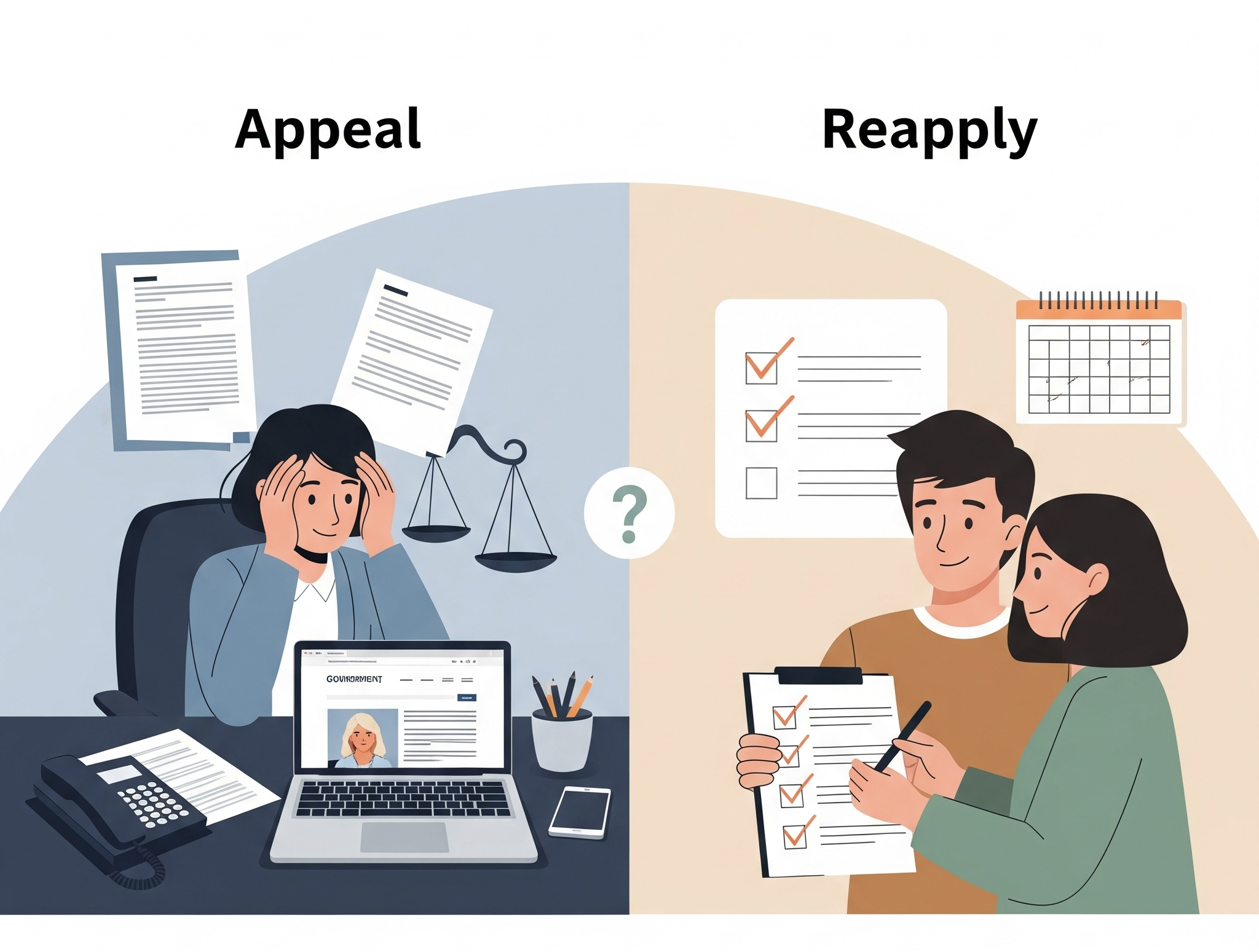
File an Appeal or Reapply
Depending on the circumstances and the country’s immigration processes, you may have the option to appeal the refusal or submit a new application. Ensure that you have addressed all the concerns raised in the refusal letter before proceeding.
Check Application Details
Review your application thoroughly for any errors, inconsistencies, or missing information. Providing accurate and complete details can help prevent further complications during the immigration process.
Maintain Open Communication
Keep open lines of communication with immigration authorities, if possible, to clarify any misunderstandings or provide additional information when requested. This proactive approach can demonstrate your willingness to comply with the process.
Taking these steps can help applicants rectify issues from a spouse visa refusal and increase their chances of obtaining a favorable outcome in the future.
Tips to Avoid Spouse Visa Refusals
Apart from following the necessary steps in the immigration process, there are some tips that can help you avoid spouse visa refusals. These include:
- Provide Accurate Documentation: Ensure all required documents are complete, accurate, and submitted on time. Double-check for consistency in information across forms and supporting documents, as discrepancies can lead to refusals.
- Meet Financial Requirements: Verify that you meet the financial criteria set by immigration authorities. Provide clear evidence of your income or savings to demonstrate financial stability.
- Demonstrate Genuine Relationship: Compile strong, credible evidence of your relationship, such as photographs, communication records, and statements from family or friends. This helps to prove that your marriage is authentic.
- Follow Application Guidelines: Familiarize yourself with the specific application process and guidelines for your country. Improperly filled forms or missing details can result in rejection.
- Seek Professional Guidance: Consider consulting an immigration lawyer or advisor to ensure all aspects of your application are handled correctly. Professional guidance can minimize errors and improve your chances of success.
By following these tips, applicants can better prepare their spouse visa applications and reduce the likelihood of rejection.
Seeking Professional Assistance
Navigating the complexities of a spouse visa application can be overwhelming, especially with varying rules and requirements across different countries. Seeking professional assistance from an experienced immigration lawyer or advisor can help simplify the process.
These experts are equipped to provide tailored advice, ensure your application meets all legal standards, and address any potential issues proactively. They can also help interpret legal jargon, provide insights on how to strengthen your case, and represent you in case any complications arise.
While hiring a professional may involve additional costs, their expertise can significantly increase the likelihood of a successful outcome, making it a worthwhile investment for many applicants.
Conclusion
In conclusion, navigating the complexities of immigration processes can be daunting, especially when faced with setbacks like a spouse visa refused UK decision. Seeking assistance from experienced professionals can provide invaluable support, ensuring all requirements are meticulously met and increasing the chances of a positive resolution. While the process may seem challenging, the right guidance and expertise can turn obstacles into opportunities, paving the way for a smoother and more successful outcome.
Frequently Asked Questions (FAQs)
Can I appeal a refused spouse visa decision?
Yes, if your spouse visa application is refused, you may have the right to appeal the decision. It is essential to review the refusal letter carefully to identify the reasons and determine whether an appeal is the best course of action.
How long does the appeal process take?
The duration of the appeal process can vary based on the complexity of the case and the workload of the tribunal. On average, it may take several months, so it is important to prepare thoroughly and seek professional guidance when necessary.
What steps can I take to strengthen my reapplication?
To strengthen your reapplication, address all the issues raised in the refusal decision. Ensure that all required documents are submitted, provide clear evidence of meeting eligibility requirements, and consider consulting an immigration specialist for tailored advice.
Do I need an immigration lawyer to handle my case?
While it is possible to handle the process independently, seeking help from an experienced immigration lawyer can significantly improve your chances of success. A professional can guide you through the requirements, help gather strong evidence, and represent your case effectively.
Official Sources & References
This guide is based on official UK government sources. All information is current as of 2026.
- UK Government — Apply for an ETA
- UK Government — ETA Guidance
- UK Government — Check If You Need a UK Visa
- UK Government — Standard Visitor
- VisitBritain — Getting to Britain
UK ETA 2026: Complete Guide for International Travelers
Additionally, the UK Electronic Travel Authorisation (ETA) is a digital pre-clearance requirement introduced by the United Kingdom Home Office as part of its modernised border control system. All eligible non-visa nationals must obtain an approved ETA before travelling to the United Kingdom, whether for tourism, business, transit, or short stays. Understanding the full scope of the ETA system helps travellers prepare effectively and avoid disruption at the border.
What Is the UK ETA?

Furthermore, the UK ETA is an electronic authorisation linked digitally to your passport. It is not a visa and does not involve a stamp or sticker. The authorisation permits multiple short stays in the United Kingdom over a two-year period, or until your passport expires, whichever comes first. Each individual visit may last up to six months. The ETA is valid for visits for tourism, visiting friends or family, business meetings, short-term study, and transit through UK airports.
Who Needs a UK ETA?

Moreover, citizens of countries that currently benefit from visa-free access to the UK but are not British or Irish nationals are required to hold a UK ETA. This includes nationals of countries such as the United States, Canada, Australia, New Zealand, Japan, South Korea, UAE, and most European Union member states. British and Irish nationals do not require an ETA. Holders of valid UK visas are also exempt from the ETA requirement during the validity of their visa.
How to Apply for a UK ETA
In addition, the application process for a UK ETA is fully digital and typically straightforward. Here is a step-by-step overview of the process:
- Prepare your documents: You will need your valid passport, a working email address, and a payment method. Make sure your passport is valid for the duration of your intended travel.
- Submit the online application: Complete the application form with accurate personal and travel information. Double-check all details before submitting, as errors may cause delays or rejection.
- Pay the ETA fee: The UK ETA currently costs £20. Payment is made online by card at the time of application.
- Wait for a decision: Most applications are decided within hours. In some cases, a decision may take up to three working days. You will be notified by email once a decision has been made.
- Check your ETA status: Once approved, your ETA is digitally linked to your passport. You can verify it using the UK Visas and Immigration online service at any time.
- Travel to the UK: Present your passport at the UK border. Border Force officers can verify your ETA electronically. You do not need to carry a printed copy of your ETA.
UK ETA Cost and Validity
| Feature | Details |
|---|---|
| Application Fee | £20 per person |
| Validity Period | 2 years or until passport expiry |
| Permitted Stays | Multiple entries, up to 6 months each |
| Processing Time | Usually within hours; up to 3 working days |
| Format | Digital only — no sticker or stamp |
What Activities Are Permitted Under the UK ETA?
Therefore, travellers entering the UK on an ETA may engage in a range of approved activities. These include tourism and sightseeing, visiting family and friends, attending business meetings or conferences, short courses or academic visits lasting no longer than six months, and transiting through UK airports on the way to another destination. Working in the UK or taking up paid employment is not permitted under the ETA. Volunteers working without pay in certain limited contexts may be permissible but should seek guidance in advance.
At the UK Border

Consequently, upon arrival in the UK, passengers holding an ETA will go through standard border control procedures. Border Force officers may ask about the purpose of your visit, intended duration of stay, accommodation arrangements, and financial means. It is advisable to carry supporting documents such as a return ticket, hotel booking confirmation, invitation letter if visiting family or friends, and recent bank statements. Having these documents readily available helps to demonstrate the genuine nature of your visit and avoids unnecessary delays.
Frequently Asked Questions About the UK ETA
Can I extend my stay beyond six months?
No. The ETA does not permit extensions of leave. If you wish to remain in the UK longer than six months, you must apply for an appropriate UK visa before your current leave expires. Overstaying is a serious immigration offence.
What happens if my ETA application is refused?
If your ETA is refused, you will receive a notification explaining the outcome. You may be able to apply for a UK Standard Visitor Visa instead. Common reasons for refusal include a previous immigration violation, a criminal record, or security concerns flagged during background checks.
Is the UK ETA the same as a visa?
No. The ETA is not a visa. It is a lighter-touch travel authorisation designed to pre-screen travellers from low-risk countries. Unlike a visa, it does not require an appointment, biometric enrolment, supporting documents pack, or in-person attendance at a visa application centre.
Do children need a UK ETA?
Yes. Every traveller, regardless of age, who is required to hold an ETA must have their own individual ETA linked to their own passport. Parents should apply on behalf of young children.
Can I use any UK port of entry with an ETA?
Yes. The UK ETA is valid for entry through all UK ports of entry, including airports, seaports, and international rail terminals such as London St Pancras via the Eurostar. There are no restrictions on which entry point you use.
Renewing Your UK ETA
As a result, a UK ETA is not renewable in the traditional sense. When it expires — after two years or when your passport expires — you simply apply for a new ETA. The application process is the same as for a first-time application. If you obtain a new passport before your ETA expires, your existing ETA is automatically voided and you must apply for a new ETA linked to your new passport. There is no fee waiver or discount for renewal applications.
Important Warning: Overstaying the UK ETA
For this reason, overstaying your permitted leave in the UK is a serious immigration offence with significant consequences. It can result in removal from the UK, a ban on re-entry for up to ten years, difficulties obtaining future UK visas or ETAs, and potential impacts on visa applications to other countries. Always plan your trip carefully within the six-month maximum stay per visit and ensure you depart the UK before your leave expires. If unforeseen circumstances arise, contact UK Visas and Immigration immediately rather than remaining unlawfully.


 English
  Arabic
  Bengali
  Bulgarian
  Catalan
  Chinese
  Croatian
  Czech
Czech  Danish
  Dutch
Dutch  Estonian
  Finnish
  French
  German
  Greek
Greek  Hebrew
  Hindi
Hindi  Hungarian
  Icelandic
  Indonesian
  Italian
  Japanese
  Korean
  Latvian
  Lithuanian
  Norwegian
  Polish
  Portuguese
  Romanian
  Slovak
  Spanish
  Vietnamese
  Malay
Malay  Slovenian
  Swedish
  Turkish