 Aller au contenu

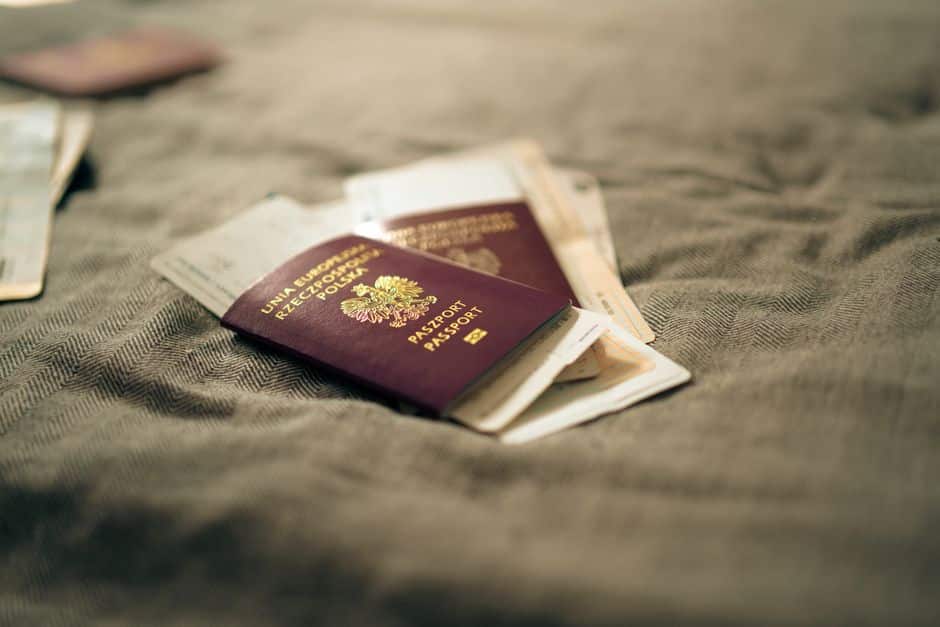
British and Irish citizens and people holding UK immigration permission, including settled or pre-settled status, do not need a UK ETA. Every other visa-exempt traveller, babies included, needs one: £20 per person, non-refundable, valid for two years or until the passport expires.
Résumé : British and Irish citizens are exempt from the UK scheme, as are people who already hold a UK visa or settled status and legal Irish residents entering from within the Common Travel Area. Everyone else who is visa-exempt needs a £20 ETA valid for two years.
| Faits clés | Détail |
|---|---|
| Always exempt | British & Irish citizens |
| Exempt with status | Holders of a UK visa or immigration permission |
| Standard fee if not exempt | £20 (depuis le 8 avril 2026) |
| Validité de l'ETA | 2 ans ou jusqu'à l'expiration du passeport |
| Délai de décision | Usually within 1 day, up to 3 working days |
Knowing whether you fall under an exemption saves money and confusion. You can confirm your status on the official UK government ETA overview (accessed 2026-06-23), and our guide to UK ETA requirements by nationality shows who does need one.
Who is on the UK ETA exemptions list?
The exemptions cover British citizens, Irish citizens, anyone with a valid UK visa, settlement or another form of permission, holders of indefinite leave to remain, and lawful residents of Ireland who travel within the shared UK–Ireland zone. These travellers already have the right to enter, so the authorisation does not apply to them at all.
Passport rules matter here too. Since 1 October 2021 the UK has not accepted EU national ID cards, including Belgian eID and Kids-ID, from ordinary visitors, so a passport is required. The exceptions are holders of settled or pre-settled status under the EU Settlement Scheme, EUSS family permit holders, frontier worker permit holders, S2 Healthcare Visitors, and people with a pending EUSS application who have confirmation of it.
The exemptions exist because an ETA is only for visa-exempt visitors who would otherwise arrive with no prior screening. People who already hold permission — a Standard Visitor visa, a work or study visa, settled or pre-settled status, or a Biometric Residence Permit — are covered by that permission. The Home Office confirms that those with existing UK immigration status must not apply for one (Orientation du UK Home Office sur l'ETA, checked 2026-06-23). The scheme began on 8 January 2025 for non-Europeans and expanded to EU nationals on 2 April 2025.

Not sure where you stand? GOV.UK’s visa and ETA checker (verified 2026-11-27) confirms your exact position in under a minute. Our explainer on UK ETA requirements for EU nationals covers the April 2025 expansion in full.
How dual nationals and Irish residents qualify
Dual nationals with an Irish passport or a British one are exempt and should travel on that document instead of applying. Lawful residents of Ireland are also exempt when they enter the UK from within the Common Travel Area. This follows from the long-standing free-movement arrangement between the UK and Ireland.
The key rule is consistency: use the same passport to book, check in and cross the border. For the finer detail, see our guide on which passport dual citizens should use et le ETA eligibility page on GOV.UK (accessed 2026-06-23).

Conseil pratique : A dual national who buys an ETA on their non-British passport by mistake cannot get a refund — the £20 fee is non-refundable. Always travel on your UK or Irish passport if you hold one.
Common mistakes about who is exempt
The most common error is assuming an exemption that does not exist. Visa-free status alone does not make you exempt — visa-exempt Americans, Canadians, Australians and EU citizens all must still apply. Holding an expired UK visa, or simply having visited the UK before, does not place you on any exemption, and landside airport transit still requires an ETA, while airside transit without border control is temporarily exempt.
Another frequent misunderstanding involves transit. Travellers who pass through UK border control require an ETA; a purely airside connection at Heathrow or Manchester is currently exempt. Check with your carrier before you fly, as the transit exemption is under review. Children are never exempt by age — every infant needs an individual ETA. The same rules apply to babies and adults alike, and each child needs their own £20 ETA. If you are connecting through the UK, read our guide to UK ETA rules for transit and stopover passengers and check the official transit guidance published by GOV.UK (reviewed 2026-06-23).

Cruise passengers are a special case worth checking, because rules can differ depending on whether you disembark. Our UK ETA cruise passenger guide explains port-by-port requirements in detail.
What the exemptions mean for families and groups
For families and groups, the exemptions are assessed person by person, not as a household. Exemption depends on nationality, never on age: a child travelling on a British or Irish passport is exempt, but a child without such a passport needs their own £20 ETA, just like an adult. Each traveller’s passport must therefore be checked individually before any booking is confirmed.
This matters most for mixed-nationality families. Group organisers and tour leaders should never assume one rule covers everyone. The Home Office applies the same per-person logic to school trips, although a limited concession exists for some organised French school parties. For families travelling with minors, our Guide de l'AVE au Royaume-Uni pour les enfants et les bébés explains how to apply for those who are not exempt, and you can confirm each person via GOV.UK’s ETA eligibility page (accessed 2026-06-23).
How to use the UK ETA exemptions list before you travel
Before booking, run your nationality and passport through the official gov.uk checker rather than relying on memory or old advice. Confirm whether you are fully exempt, require an ETA, or need a visa, and if your exemption rests on existing status, carry the document that proves it when you travel.
An ETA is linked to the passport named in your application and is valid only when you travel on that passport. If you renew, replace or change your passport, you need a new ETA, because there is no way to transfer one. It lasts two years or until the passport expires, whichever comes first. Check that the passport you book with is the one you will carry at the border.
Follow these steps to confirm your position with confidence:
- Run the official checker à gov.uk/check-uk-visa to confirm whether you are exempt.
- Identify your strongest document: an Irish passport, a British passport, or proof of settled status.
- If not exempt, apply early via the official ETA service on GOV.UK, allowing up to three working days for a decision.
- Carry the proof of exemption or your ETA-linked passport to the airport.
EU Settlement Scheme status exists only digitally, as an eVisa, with no physical card. If your exemption rests on settled or pre-settled status, use the GOV.UK service ‘View and prove your immigration status’ before you travel to generate a share code that proves it to your carrier or at the border. Keep the passport linked to your eVisa with you, because a national ID card alone will not be accepted.

- Conseil 1 : If you have an Irish or a British passport, travel on it. That is the simplest exemption.
- Conseil 2 : Do not assume transit is exempt; check our guide des transports d'abord.
- Conseil 3 : If you already hold a valid UK visa, you’re exempt. Don’t apply for an ETA on top of it.
The short version: only four groups stay outside the scheme. They are British and Irish citizens, anyone holding UK immigration permission, dual nationals who also hold either of those passports, and qualifying Irish residents. Everyone else who is visa-exempt pays £20 for an authorisation that lasts two years and covers repeat visits of up to six months each. Confirm your status on GOV.UK’s ETA page before you book and check every traveller in your party one by one, so you never pay a fee you do not owe.
Questions fréquemment posées
Where is the official UK ETA exemptions list?
The authoritative source is the gov.uk ETA eligibility pages and the visa checker. They confirm whether your nationality and status make you exempt, require an ETA, or require a full visa, usually within a minute.
Are British citizens exempt from the UK ETA?
Yes. British citizens never need a UK ETA and should travel on their British passport. The same applies to Irish citizens, who are exempt under the Common Travel Area arrangement.
Does holding a UK visa exempt me from the ETA?
Yes. If you have a valid UK visa, settled or pre-settled status, or other immigration permission, you’re exempt and must not apply for an ETA as well.
Do children and babies need their own ETA?
No. There is no age exemption. Every traveller, including newborn babies, needs their own £20 ETA unless they qualify under another exemption such as British or Irish citizenship.
Do I need an ETA if I only transit through a UK airport?
It depends. Airside transit without passing border control is temporarily exempt (in practice at Heathrow and Manchester), but landside transit requires an ETA. Check the gov.uk transit guidance for your specific route before travelling.
Can dual nationals avoid the ETA?
Yes, if they hold a British or Irish passport. Dual nationals should travel on that passport and do not need an ETA. Use the same passport for booking, check-in and entry.
Is the £20 ETA fee refundable if I was actually exempt?
No. The £20 fee is non-refundable, even if you were exempt and applied by mistake. Check your status on the gov.uk checker before you pay.
Dernière mise à jour : 2026-06-23 — vérifié selon le calendrier gov.uk.
Checked on 2026-11-27 against official sources: the £20 fee and its non-refundable status Apply for an ETA, the two-year validity Electronic Travel Authorisation overview, the decision times Home Office ETA factsheet, April 2026, and the unchanged fee in the Home Office fees table, October 2026.
 French
 English
 Arabic
 Bengali
 Bulgarian
 Catalan
 Chinese
 Croatian
 Czech
 Danish
 Dutch
 Estonian
 Finnish
 German
 Greek
 Hebrew
 Hindi
 Hungarian
 Icelandic
 Indonesian
 Italian
 Japanese
 Korean
 Latvian
 Lithuanian
 Norwegian
 Polish
 Portuguese
 Romanian
 Slovak
 Spanish
 Vietnamese
 Malay
 Slovenian
 Swedish
 Turkish