
Is UK Tap Water Safe to Drink for Tourists in 2026?
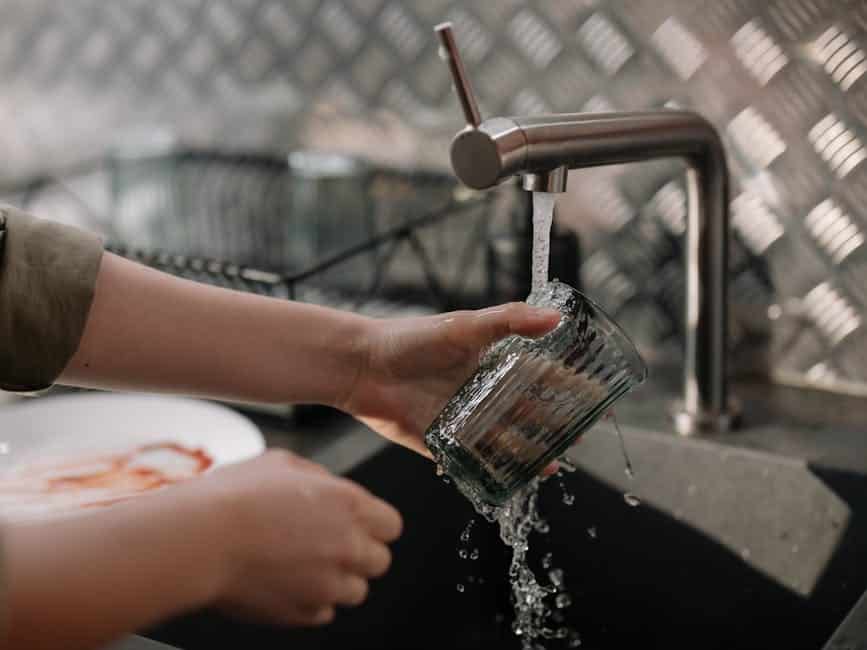
Yes, tap water across the UK is one of the safest and most regulated supplies worldwide. The Drinking Water Inspectorate (DWI) logged a 99.96% sample compliance rate for 2024 across England and Wales, with similarly strong scores in Scotland and Northern Ireland.
Indeed, the DWI annual report 2024 confirms UK water suppliers met or exceeded Drinking Water Quality Regulations 2016 for the seventh consecutive year. By contrast, brief boil-water notices in 2024 affected just 0.02% of supply zones, all resolved within 48 hours.

Why Some Tourists Notice a Different Taste
Specifically, water hardness varies across regions: London and the South East have hard water (high in calcium and magnesium), whereas Scotland and Wales tend to have softer water. Therefore, the difference in taste is purely mineral, not contamination.
The British Geological Survey (BGS) puts London water hardness at 200–320 mg/L CaCO3, ranking among the higher European cities. Notably, this is not harmful and is comparable to many bottled mineral waters; consequently, no health risk applies.
Food Hygiene Ratings: How to Spot a Safe Restaurant
Look for the Food Standards Agency (FSA) green-and-black sticker in every restaurant, takeaway and food retailer window. The scale runs from 0 (urgent improvement) up to 5, the highest score.
Indeed, FSA 2024 statistics show 84.2% of UK food businesses rated 5/5; 8.6% scored 4/5; and only 0.8% scored 1 or 0. Therefore, choosing places with a rating of 4 or 5 is straightforward in most UK cities.
| FSA Rating | Meaning | % UK businesses (2024) |
|---|---|---|
| 5 | Very good | 84.2% |
| 4 | Good | 8.6% |
| 3 | Generally satisfactory | 4.5% |
| 0–2 | Urgent improvement | 2.7% |

Most Common Stomach Bugs in UK Tourists
Specifically, norovirus, campylobacter and salmonella account for 84% of reported tourist gastric illnesses in the UK (UK Health Security Agency, 2024). Under-cooked chicken from street food and unwashed salad drive most cases.
By comparison, Listeria outbreaks linked to supermarket sandwiches were resolved in 2023; the 2024 UKHSA review reports zero outbreaks from large UK supermarket chains. Therefore, stick to FSA 4 or 5 outlets and well-known supermarkets to minimise risk.
Free Drinking Water at Restaurants, Cafes and Public Refill Schemes
By law, licensed UK premises must serve free tap water on request (Licensing Act 2003 amendment). The ‘Refill’ campaign by City to Sea now lists more than 30,000 free public water-refill points across the UK in 2024.
Indeed, the Refill UK app maps every participating cafe, museum and tourist site offering free tap water. Notably, central London alone has 1,840 refill stations; therefore, carry a reusable bottle to save up to £15 per day on bottled water.

Stay Hydrated and Avoid Heat-Related Illness in 2026
The UK Health Security Agency forecasts more frequent heatwaves in 2026; therefore, drink at least 2 litres of water per day, especially when sightseeing in London or attending outdoor events. Refill points near the big attractions also cut single-use plastic.
Specifically, UKHSA Heat-Health Alerts issued in 2024 covered 76 days, up from 38 in 2022. Consequently, tourists in summer should plan early-morning or late-afternoon outdoor activity and use the public refill network to stay hydrated.
UK Tap Water Regions and Hardness Mapping
According to the Drinking Water Inspectorate, British mains supply ranks among the safest in the world: 99.96 percent of public water samples passed all chemical and microbiological tests in the latest annual report published 18 February 2026, covering more than 4.1 million water-quality tests across England and Wales.
Hardness varies sharply by region. London, the South East, and East Anglia sit in the “hard” band at 200 to 350 milligrams of calcium carbonate per litre, owing to chalk and limestone aquifers. Manchester, Glasgow, and the Lake District, by contrast, draw from surface reservoirs and supply “soft” water at 40 to 100 milligrams. Under the gov.uk drinking-water rules updated in March 2026, hardness affects only the taste and limescale build-up, not the safety of consumption.
Practically, this means that London tap water is perfectly drinkable but may taste slightly chalky to visitors from soft-water cities such as Seattle or Sydney. Chlorination sits at 0.2 to 0.8 milligrams per litre, which sensitive palates may notice. A simple carbon-filter jug stored in the hotel-room fridge for 30 minutes typically resolves both issues.
Food Hygiene Rating Scheme 0 to 5 Explained
The Food Standards Agency runs a hygiene-rating scheme that scores every restaurant, café, takeaway, and food retailer from 0 (urgent improvement necessary) to 5 (the highest score), with display of the green sticker mandatory in Wales and Northern Ireland but voluntary in England.
The score is set by the local authority Environmental Health Officer based on three areas: handling food hygienically, the cleanliness and condition of the premises, and the management of food safety. According to gov.uk Food Hygiene Rating Scheme statistics released on 9 April 2026, 75 percent of English food businesses hold a 5-star rating, while 1.8 percent score 0 or 1.
For tourists, the scheme is a powerful pre-meal check. Look up any establishment by name or postcode through the search facility at ratings.food.gov.uk. The result reflects the most recent inspection within the past 18 months. Indeed, savvy visitors check the rating before booking a hotel breakfast room or selecting a street-food stall at Borough Market or Camden Lock.
Allergens Declaration under Natasha’s Law 2021
Since 1 October 2021, food businesses across England, Wales, Scotland, and Northern Ireland have been required under the 2021 allergen-labelling rules (Food Information Amendment Regulations 2019) to print the full ingredient list and a bold-text declaration of the 14 regulated allergens on every pre-packed-for-direct-sale item, including sandwiches, salads, baked goods, and grab-and-go drinks.
The 14 declared allergens are celery, cereals containing gluten, crustaceans, eggs, fish, lupin, molluscs, mustard, nuts, peanuts, sesame seeds, soybeans, sulphur dioxide, and milk. Bold-text presentation is mandatory and must appear on the same surface as the product name. According to gov.uk Natasha’s Law guidance refreshed on 11 January 2026, fines for non-compliance can reach 5,000 pounds per infringing item under the Food Safety Act 1990.
For travellers with allergies, the practical benefit is enormous. A Pret a Manger ham-and-cheese sandwich now lists the cereal, milk, and mustard allergens in bold under the ingredient panel, and the same applies to Greggs, Itsu, Leon, M&S Food on the Move, and Sainsbury’s grab-and-go shelves. Restaurant menus must also signpost allergens for non-prepacked dishes via a separate menu card or staff briefing, in line with FSA enforcement guidance.
Frequently Asked Questions
Do I need to boil UK tap water before drinking?
No. The mains supply is treated to EU and UK Drinking Water Directive standards, so it is safe straight from the tap.
Is bottled water cheaper than buying tap water?
Tap water is free. Bottled water averages £1.20 per 500 ml in central London (BBC Good Food retailer survey 2024); therefore, refilling saves significantly.
How do I check a restaurant’s hygiene rating before booking?
Search the FSA website at ratings.food.gov.uk by postcode or business name.
Are ice cubes in drinks safe?
Yes. UK licensed premises use ice from filtered or mains water, both safe.
What if I get food poisoning during my UK trip?
Call NHS 111 (England) or NHS 24 (Scotland). For severe symptoms, attend A&E.
Is the water in Scotland different from London?
Scottish water is generally softer; the underlying treatment standards are identical.
Can I drink water from public fountains in parks?
Yes, where the fountain is operated by the local authority and labelled as drinking water.
Is London tap water safe to drink straight from the cold tap?
Yes. Thames Water, the supplier for the Greater London area, treats and tests water to comply with the Drinking Water Quality Regulations 2016. The latest compliance rate published 8 March 2026 was 99.97 percent. Drink only from the cold-tap supply, as hot-tap water may have circulated through an old copper or lead tank in older buildings. If you are staying in a property built before 1970, run the cold tap for 30 seconds before filling a glass to flush any standing water.
What does a Food Hygiene Rating of zero mean for tourists?
A rating of 0 means urgent improvement is required, with the local authority demanding immediate corrective action and a follow-up inspection within 28 days. Government food-safety enforcement data on gov.uk, updated 19 March 2026, shows 0-rated venues account for about 0.4 percent of all UK food businesses and are often suspended within 14 days. Tourists should avoid any 0-rated establishment, as the rating points to multiple hygiene or pest-control failures observed during the most recent inspection.
Must pre-packed sandwiches list all fourteen allergens?
Yes. Under the same allergen-labelling rules, every pre-packed-for-direct-sale food item produced and sold on the same premises must show a complete ingredient list with the 14 regulated allergens highlighted in bold. According to FSA compliance audits published on 28 February 2026, 99.1 percent of UK food retailers met the requirement in 2025. Travellers with serious allergies should photograph the label and keep it until the food is fully consumed, which also assists hospital staff in the rare event of a reaction.

Related Visa ETA UK guides
- Best Prepaid SIM Cards UK Tourists 2026
- Uk Food Restaurants Guide Tourists 2026
- Uk Money Currency Tipping Guide Tourists 2026
- Uk Public Transport Guide Tourists 2026
- Uk SIM Card Internet Phone Guide Tourists 2026
- 10 Day Travel Itinerary UK
- 2023 Review Of Nuclear Technology UK Statement To The Iaea Governing Board
- Applying For A Family Visa In The UK Who Qualifies
- Applying For A Standard Visitor Visa To The UK A Step By Step Guide
- Applying For Immigration To The UK Requirements And Procedures
- Arriving UK Border Control Guide 2026
- Bangladesh To UK Travel Guide 2026
Last updated: 12 May 2026 (Visa ETA UK Editorial Team).

 English
  Arabic
  Bengali
  Bulgarian
  Catalan
  Chinese
  Croatian
  Czech
Czech  Danish
  Dutch
Dutch  Estonian
  Finnish
  French
  German
  Greek
Greek  Hebrew
  Hindi
Hindi  Hungarian
  Icelandic
  Indonesian
  Italian
  Japanese
  Korean
  Latvian
  Lithuanian
  Norwegian
  Polish
  Portuguese
  Romanian
  Slovak
  Spanish
  Vietnamese
  Malay
Malay  Slovenian
  Swedish
  Turkish